
Fish Finder Universal Transducer Bracket
5.0Editor score
Marine-grade composite and aluminum
Adjustable 3.15-inch clamp opening
Full 360-degree positioning
Portable 31.5-inch assembly
Looking for the best depth finder transducer mount? This guide compares ten options for kayaks, boats, gear tracks, and transoms by durability and versatility.
A depth finder transducer mount must hold your sensor securely while preserving the alignment needed for useful sonar readings. The right choice depends on your vessel, attachment point, transducer dimensions, and willingness to modify the boat. Clamp, adhesive, rail, post, gear-track, and transom-style options each solve different installation challenges.
We compared the ten products using their stated materials, mounting methods, adjustment ranges, dimensional specifications, compatibility, and included hardware. The guide covers portable boat brackets, screwless stern pads, kayak and SUP arms, model-specific plates, rail clamps, and a dedicated Humminbird mounting solution for angling across different watercraft.
Each review explains what makes the mount useful, identifies important limitations, and clarifies what hardware may still be required. Ratings reflect the supplied customer feedback, while practical fit remains the deciding factor. Product availability and pricing can change, so confirm the current transducer and accessory compatibility before ordering.
5.0Editor score

4.5Editor score
4.6Editor score
This side-by-side comparison shows the most important differences in mounting style, construction, adjustability, and intended vessel. The options range from adhesive stern pads to portable clamps, kayak arms, drilled transom brackets, and model-specific mounting plates.




The Portable Transducer Bracket has a 4.5 rating and stands out as a flexible permanent-boat solution that avoids drilled holes. Its powder-coated aluminum construction, broad 15-to-23-inch adjustment range, and simple C-clamp attachment make it especially useful when an angler wants to reposition a transducer without modifying the hull.
We may earn a commission when you buy through this link, at no additional cost to you.
The 2.375-inch clamp opening gives the bracket meaningful compatibility with suitable transoms, while quick depth adjustments help an installer tune the sensor's position. A threaded hole on top of the clamp also creates a path for compatible add-on electronics, making the assembly more versatile than a basic transducer holder.
The transducer is not included, and the clamp dimensions still need to match the boat. Because the mount is designed for a transom rather than a rail or gear track, it is not a universal solution for kayaks, canoes, or boats without a suitable mounting edge. Those limitations are understandable for a dedicated no-drill boat bracket.
This is a strong choice for owners of compatible powerboats who want repeatable positioning and easy removal. It is especially compelling when avoiding permanent drilling matters, while the broad adjustment range helps accommodate different transducer sizes and preferred sonar alignment.
The clamp and adjustment mechanism make this useful for temporarily repositioning the transducer without putting holes in the transom. It is better suited to a recurring installation on one compatible boat than to moving between radically different hull designs.
Aluminum construction with a black powder coat provides a durable base for outdoor use. The finish also helps protect the bracket from the wear and corrosion commonly associated with repeated freshwater and saltwater exposure.
We may earn a commission when you buy through this link, at no additional cost to you.
The Black Standard Stern Pad carries a 4.6 rating and offers a clean alternative to conventional transom drilling. Its screwless installation system, compact 4.5-by-3.5-inch footprint, and included cable clips create a neat mounting point for compatible transducers and accessories.
We may earn a commission when you buy through this link, at no additional cost to you.
The listed installation process takes less than five minutes of active work, although the adhesive requires 18 hours to cure. That distinction matters: the mount is quick to position, but the boat should not be launched immediately after placement. The pad can be bottom painted, allowing it to blend more closely with the hull.
This standard size is explicitly not intended for large 3D scanning transducers. Adhesive mounting also depends on careful surface preparation and a hull area suitable for the supplied installation method. It does not provide the same easy repositioning as a clamp or adjustable arm.
Choose this mount for anglers with a compatible standard transducer who want a low-profile stern installation without screw holes. It is a particularly useful option for preserving a boat's hull and keeping the transducer area visually tidy.
The screwless format avoids exposed fasteners and can be bottom painted for a more integrated look. The three included cable clips also help keep loose cable runs organized beneath or behind the stern area.
The quick setup should not be confused with immediate launch readiness. The stated 18-hour cure period gives the adhesive time to establish a reliable bond before the assembly encounters water and movement.
We may earn a commission when you buy through this link, at no additional cost to you.
The 7400931 MHX XNT Transducer Bracket has a 4.6 rating and is built around compatibility with a long list of XNT transducers. It also lists compatibility with numerous Humminbird HELIX, SOLIX, ION, ONIX, and other unit families, making it a practical choice when the exact sensor model is known.
We may earn a commission when you buy through this link, at no additional cost to you.
Marine-grade material and a two-slot design support a secure, adjustable transom installation. Anglers can refine the transducer's angle before drilling the third hole, which helps avoid an avoidable change to the boat. The included manual and simple three-screw arrangement simplify the stated installation process.
Unlike adhesive or clamp-based alternatives, this bracket requires permanent modification through three holes in the transom. Its broad electronics compatibility should not be mistaken for universal transducer support, so the exact XNT or XHS model must be verified before purchase. The mounting position should also be checked against the boat's geometry.
This is a good match for anglers who own a listed XNT-style transducer and prefer a drilled, firmly positioned transom bracket. It is less suitable for people who need a removable setup, use a kayak, or want to avoid modifying the hull.
The two-slot layout allows the sensor angle to be refined before the last hole is drilled. Checking the complete layout first helps reduce the chance of changing hole positions later.
The unusually broad compatibility list is valuable, but it can be confusing. Buyers should search the list for their exact transducer and electronics model rather than relying only on the product family name.
We may earn a commission when you buy through this link, at no additional cost to you.
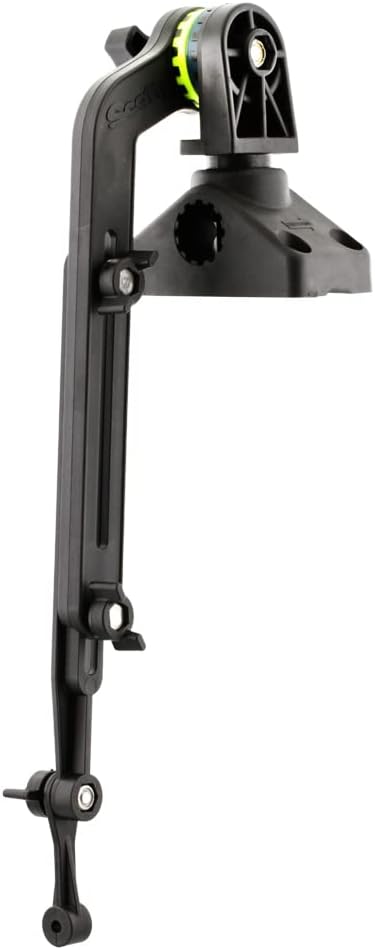
The Universal Kayak Fish Finder Mount has a 4.1 rating and focuses on fast, tool-free installation in a kayak gear track. The included base, track attachment, transducer arm, and hardware create a convenient package for anglers who already use track-equipped kayaks.
We may earn a commission when you buy through this link, at no additional cost to you.
Its arm adjusts from 9 to 14 inches, allowing the transducer angle and position to be refined for different hulls and fishing conditions. Marine-grade composite and stainless steel construction suit the saltwater and splash exposure described in the product information, while the removable setup is useful for transportation.
The mount depends on a compatible gear track, so it does not fit every kayak without that attachment point. Its compatibility with Garmin, Lowrance, and Humminbird fish finders is broad, but the transducer and display connection still need to be checked. The 4.1 rating is lower than those of most alternatives in this list.
This is a practical pick for kayak anglers who prioritize quick setup, no drilling, and easy removal. It is less suitable for a boat without a compatible track or for anyone who needs a more specialized mounting interface.
A tool-free track connection allows the assembly to be installed and removed quickly. That makes the mount attractive for anglers who move between waterways, share equipment, or carry a compact kayak regularly.
The adjustable arm gives the transducer a useful range of positions and angles. This helps anglers accommodate differing kayak hulls and achieve a stable, purposeful sensor orientation.
We may earn a commission when you buy through this link, at no additional cost to you.
The Scotty #140 Kayak/SUP Transducer Mounting Arm has a 4.6 rating and is a flexible solution for small craft. It fits all Scotty post mounts and includes the 241L locking combination side/deck mount, a Scotty post, and a 415 slip disc for fine adjustments.
We may earn a commission when you buy through this link, at no additional cost to you.
The arm telescopes from 11.5 inches to 18 inches and swivels through 360 degrees, allowing the transducer to be positioned away from the angler's seating area and adjusted as needed. The included hardware supports both a side mount and a deck mount, useful when the available attachment surface differs by kayak.
The transducer is not included, and this is not a universal mount for every brand of post system. Buyers also need the compatible Scotty accessory chain and should confirm that their hull offers a suitable side or deck location. Those requirements are modest for anglers already using Scotty fittings.
This is an excellent value pick for kayak and SUP anglers who want a stable, adjustable, and well-supported mounting point. It is especially useful for transport-oriented setups where the complete arm can be removed or repositioned with minimal complexity.
The included 415 slip disc supports micro adjustments that are difficult to achieve with a basic friction joint. This is helpful when fine transducer placement affects the consistency of the sonar image.
The arm is designed for both kayak and SUP use and works with the broader Scotty post-mount ecosystem. Its telescoping and swiveling construction can adapt as the angler changes position or moves to another compatible craft.
We may earn a commission when you buy through this link, at no additional cost to you.
The Scotty 0141 Kayak/SUP Transducer Mounting Arm has a 4.6 rating and adds gear-head integration to the familiar Scotty mounting format. The included 438 adapter works with a Scotty slide track and enables attachment of a universal sounder mount or other compatible post-mounted accessories.
We may earn a commission when you buy through this link, at no additional cost to you.
Its high-strength composite construction keeps weight manageable while offering a swiveling, telescoping structure. The arm extends from 11.5 to 18 inches, and the locking interface allows a fish finder mount or another Scotty post accessory to be placed on top.
The transducer, universal sounder mount, slide track, and other desired accessories may need to be purchased separately. The product therefore offers a strong modular platform but may not be the simplest complete setup for someone beginning from scratch. Kayak compatibility also depends on the required track and mounting surfaces.
Choose this option for an angler who already uses Scotty slide-track equipment or wants a flexible modular setup. It is a particularly good choice when the mounting arm may later carry more than just a transducer.
The gear-head design expands the arm's role beyond a single transducer holder. It can support compatible Scotty post-mount equipment, making it easier to build a compact, organized kayak electronics station.
The combination of 360-degree swivel movement and an 11.5-to-18-inch telescoping range gives the transducer room to move. That flexibility is particularly useful in narrow kayaks where precise placement is important.
We may earn a commission when you buy through this link, at no additional cost to you.
The Perception Kayaks Fish Finder Transducer Mounting Plate has a 4.2 rating and is specifically designed for kayaks with a Fish Finder Console and transducer scupper. Its mounting holes align with molded inserts, making it a straightforward option for compatible Perception and Wilderness Systems models.
We may earn a commission when you buy through this link, at no additional cost to you.
The high-density polyethylene plate can be drilled to accommodate hole patterns from most transducer brackets. A recessed area accepts backing hardware, and the product includes stainless steel mounting hardware and instructions. Its stated dimensions are 4.5 by 3 by 0.5 inches, with a weight of 0.168 pounds.
Compatibility is limited to the listed Perception and Wilderness Systems models, so it is not a universal plate for all kayaks. Mounting hardware for the transducer itself is not included. The product also requires drilling for different bracket patterns, even though it avoids the need to modify the kayak's molded insert locations.
This plate is a strong choice for a compatible kayak owner who wants a clean, purpose-built base. It is less attractive for people with a different hull brand, an open canoe, or a preference for a completely tool-free rail installation.
The aligned hole pattern takes advantage of the fish finder console's molded inserts. That creates a more integrated installation than attaching an unrelated bracket directly to the kayak deck.
The plate can be drilled to suit hole patterns from most transducer brackets. Buyers should still compare the plate dimensions and available drilling area with their selected transducer bracket before modifying anything.
We may earn a commission when you buy through this link, at no additional cost to you.
The RAM MOUNTS Fish Finder Mount for Humminbird Helix, Solix and Xplore has a 4.8 rating and is the most premium dedicated electronics mount in this group. It is a complete flat-surface, drill-down solution for supported Humminbird displays rather than a transducer-specific bracket.
We may earn a commission when you buy through this link, at no additional cost to you.
Power-coated marine-grade aluminum and RAM ball-and-socket technology provide durable construction and extensive positioning freedom. The included 3.68-inch round base, short double-socket arm, and 1.5-by-4.5-inch rectangular base give the installer several ways to connect supported electronics to the mounting surface.
Compatibility is centered on the Humminbird Helix 8, 9, and 10 and Solix 10, despite the broader product name also mentioning Xplore. The stated installation requires drilling, and the transducer itself is outside this product's function. A lifetime warranty adds reassurance for a permanent mount.
This is a premium choice for anglers with a supported Humminbird display who values precise articulation and a permanent, professional-looking installation. It should be paired with a separate transducer mount appropriate to the boat and sensor.
The ball-and-socket system offers a much wider range of viewing and positioning angles than a fixed bracket. That makes the setup useful when the display needs to face the angler, be moved aside, or accommodate changing seating positions.
This product is best understood as a high-quality support for compatible Humminbird marine electronics. It is a valuable companion to a transducer mount, but it should not be selected as a replacement for one.
We may earn a commission when you buy through this link, at no additional cost to you.
The White Standard Stern Pad has a 4.6 rating and provides a clean, screwless way to mount a standard transducer or accessory. It uses genuine 3M VHB adhesive and is explicitly identified as made in the USA, giving buyers a clear description of its material and construction.
We may earn a commission when you buy through this link, at no additional cost to you.
The pad measures 4.5 by 3.5 by 0.75 inches and includes three screwless cable clips with an installation kit. Its surface can be bottom painted, which helps it blend with a light-colored hull and avoids the exposed fasteners associated with a drilled bracket.
Installation takes less than five minutes of active work but includes an 18-hour cure period. The standard size is not suitable for large 3D scanning transducers, and the adhesive approach is not intended for frequent repositioning. Surface preparation and curing discipline are important parts of the final result.
This pad is a good alternative for an angler who wants a tidy, screw-free stern installation and can allow the adhesive to cure fully. It is especially useful for compatible standard transducers and owners who prefer not to drill the hull.
The white pad can be painted to match the underside of the boat, leaving a cleaner appearance than exposed screw heads. It also permits a low-profile installation without the mess associated with epoxy work.
The listed use of genuine 3M VHB adhesive gives the installation a defined material system rather than a generic sticky backing. Users should still follow the installation instructions and allow the full stated cure time.
We may earn a commission when you buy through this link, at no additional cost to you.
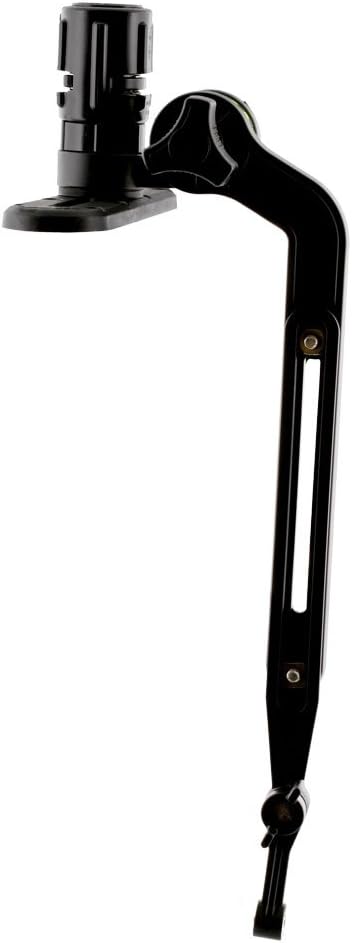
The Universal Portable Transducer Bracket has a 5.0 rating and combines a 31.5-inch assembly with a 360-degree rotating clamp. Its stated compatibility with boat rails, kayak tracks, and canoe posts gives it broad appeal for anglers who use more than one small vessel.
We may earn a commission when you buy through this link, at no additional cost to you.
High-grade nylon and CNC-machined aluminum alloy are used to balance weight, strength, and corrosion resistance. The clamp opens to 3.15 inches, while its height and orientation can be adjusted. A detachable design makes the setup practical for moving between a fishing boat, kayak, canoe, or portable ice-fishing configuration.
At 4.7 by 31.5 inches and 2.09 pounds, the extended assembly is not especially compact. The product also describes compatibility broadly, so the exact rail, track, or post dimensions should be checked before purchase. Adjustment range is useful, but it cannot compensate for an attachment point outside the stated opening.
This is the leading choice for buyers who want one portable mounting concept across several types of small craft. It offers the broadest supported adjustment in the guide, provided the angler's attachment point and storage space suit the long bracket.
The rail, kayak-track, and canoe-post compatibility makes this especially attractive to anglers who switch watercraft. The detachable construction simplifies removal when transporting the setup or moving to a different boat.
The freely rotating bracket and adjustable height allow the transducer to be oriented for different hulls and fishing conditions. This flexibility can help maintain a deliberate sensor angle rather than relying on a fixed factory position.
We may earn a commission when you buy through this link, at no additional cost to you.
The right depth finder transducer mount depends first on where and how the transducer must be mounted. Vessel construction, attachment geometry, sensor size, and desired portability should be considered before comparing adjustment features or included hardware.
Choose based on the actual attachment point rather than a broad vessel label. Measure rail thickness, track specifications, post diameter, and available transom width before ordering.
Make a compatibility checklist using the exact transducer model, electronics model, and mounting hardware. If a transducer is not included, plan to purchase it separately when necessary.
Prioritize enough range to position the transducer correctly on your hull, along with a firm final lock. A wide adjustment range is valuable only if the mount stays put.
Choose the method you can complete correctly. A permanent mount is not automatically better, and a removable mount is not automatically weaker; hull fit, locking security, and correct positioning determine the practical result.
Prioritize corrosion resistance, robust locking surfaces, and a finish intended for outdoor use. Inspect clamps, fasteners, and adjustment mechanisms periodically for wear.
For frequent transport, measure the longest deployed dimension and confirm it will fit the intended storage area. A removable or folding system can be more useful than a permanently fixed installation.
Read the included-components list before buying, then make a complete parts list for your installation. It is easier to assemble one compatible system than to discover a missing adapter after mounting.
Secure the cable before finalizing the transducer angle. Good strain relief helps prevent a connection from being pulled sideways and keeps the intended sonar position stable.
Begin by identifying the correct mounting surface and checking every compatibility list. Clean the attachment area, confirm the opening dimensions, and assemble the hardware loosely before fully tightening it. Position the transducer near its intended operating point while leaving enough room for cables and vessel movement.
For adhesive installations, follow the stated preparation and curing process rather than speeding it up with extra heat or handling. For drilled mounts, mark the full hole pattern before drilling, check behind the transom for wiring or hardware, and secure the cable with suitable strain relief. Clamp and track mounts should be tightened evenly and checked after the first launch.
Inspect the mount before each trip, paying close attention to clamp tension, loose screws, adhesive edges, arm locks, and cable clips. Rinse exposed hardware with fresh water after use in saltwater, and address corrosion or wear before it compromises the connection. Recheck the transducer angle if readings become inconsistent, since shifting or hull movement can alter alignment.
The best kayak mount depends on the hull's available fittings. A gear-track mount offers quick, tool-free installation, while a Scotty post arm is useful for small craft that already use compatible fittings. A purpose-built plate may be better for specific kayaks with molded transducer-console inserts. Confirm the track, post, or console dimensions before choosing.
No. The Portable Transducer Bracket, Scotty arms, and other mounting products are separate from the sonar sensor. The RAM Humminbird product is also a display-electronics mount rather than a transducer mount. Review the included-components list to determine whether additional transducers, brackets, adapters, or displays are required.
Yes, depending on the vessel and mount. C-clamp brackets, gear-track bases, Scotty post systems, and adhesive stern pads offer no-drill or screwless installation methods. Each has trade-offs: clamps may constrain placement, adhesive requires cure time, and track or post systems require compatible fittings already installed.
The correct position depends on the transducer design, hull, and sonar application, so the product listings do not establish one universal depth. Begin with the manufacturer's instructions and test in shallow water, then adjust the angle and position while watching the display. Secure the mount only after the sonar image is stable and useful.
A properly sized clamp can provide a secure attachment, but security depends on matching the opening to the transom, tightening it correctly, and checking it after travel. The portable options specify maximum clamp openings, so compare those figures with the actual transom thickness. Inspect the clamp before launching and add a safety tether if the application warrants one.
A transducer mount holds the sonar sensor beneath or against the boat and determines its position relative to the water. A fish finder display mount supports the screen or control unit where the angler can view it. The RAM Humminbird product belongs to the second category and may be paired with a separate transducer mount.
The two stern pad products specify an 18-hour cure time after a setup process that takes less than five minutes. Users should follow the included installation instructions, prepare the surface properly, and allow the full cure period before launching. Premature handling or wet use can interfere with adhesive bonding.
Route the cable away from sharp edges and moving components, leave enough slack for normal hull movement, and secure it with suitable clips or ties. The stern pad kits include three screwless cable clips, while other mounts may require separate hardware. Recheck the cable and strain relief after the first few trips.
The Portable Transducer Bracket is the strongest all-around option for compatible powerboats because it combines no-drill clamping, useful height adjustment, durable aluminum construction, and an additional threaded electronics attachment. For portable multi-vessel use, the Universal Portable Transducer Bracket offers exceptional 360-degree movement, while the Scotty #140 arm delivers a focused, economical solution for kayak and SUP anglers.
Prioritize the attachment method that suits your boat and verify the exact transducer model before considering secondary features. Adhesive pads are excellent for clean stern installations, gear-track and post mounts excel in kayaks, and model-specific brackets can deliver the most controlled transom positioning. The RAM Humminbird mount belongs in a separate category as a premium display support.
Product details, customer feedback, availability, and pricing can change, so check the current listing and included hardware before making a final purchase. Confirm dimensions, model compatibility, cure times, and the presence of every required adapter. With those checks complete, you can select a depth finder transducer mount that is stable, correctly positioned, and suited to how you fish.