
KBEAR TC06
4.2Editor score
Dual-chip DAC architecture
Balanced and single-ended outputs
Compact aluminum travel design
This guide compares the best DAC for Kz Castor options, covering outputs, decoding, portability, amplification, and listening convenience.
A DAC can give the KZ Castor Pro a cleaner, more capable path from a phone, tablet, or computer to the earbuds, especially when the original device output is limited. The right choice depends on connector support, decoding capability, output power, and whether portability or desktop control matters more.
This guide compares ten relevant DAC and headphone-amplification options alongside the KZ Castor Pro itself. We considered supported file formats, DAC architecture, single-ended and balanced outputs, portability, controls, app support, and suitability for high-impedance or demanding headphones.
The selections show how each product fits into a KZ Castor listening setup, from compact USB-C adapters to desktop R2R and fully balanced amplifiers. The included Castor Pro provides the tuning reference for this roundup, while product availability and pricing can change over time.
4.2Editor score

4.4Editor score
4.5Editor score
This side-by-side comparison covers portable dongles, feature-rich USB-C DAC/amplifiers, and desktop DAC/headphone amplifiers, plus the KZ Castor Pro IEM for context.


The MOONDROP Dawn PRO 2 is a portable USB DAC and headphone amplifier built for listeners who want more control than a simple phone adapter can offer. It carries a 4.4 rating and stands out through dual Cirrus Logic CS43198 chips, separate low-dropout regulators, an independent crystal oscillator, and support for both 3.5mm single-ended and 4.4mm balanced outputs. That combination makes it especially appealing for the KZ Castor Pro, whose dual-dynamic design can benefit from a clean and flexible upstream signal path.
We may earn a commission when you buy through this link, at no additional cost to you.
Its most useful feature for Castor Pro users is the revised MOONDROP app, which exposes a professional tuning interface with selectable filter types, frequency points, gain, and Q value. A headphone frequency-response database is also included as a reference. The built-in 100-level volume control separates level adjustment from the phone, reducing the likelihood that a device's coarse digital volume step will limit output. A four-volt balanced output and claimed 124mW per channel add meaningful headroom without turning the device into a large desktop unit.
The trade-offs are control complexity and connector demands. The equalizer requires time to configure, and the 4.4mm output can only be used with a properly wired balanced cable. The stated 124mW output is powerful for an IEM but remains modest compared with the FiiO K7 or K11 R2R when a full-size, high-impedance headphone is the priority. Buyers who want a visually simple adapter may also prefer one that begins decoding immediately without software setup.
This is the most complete recommendation for the KZ Castor Pro because it combines excellent hardware decoding, independent volume control, a useful equalizer, and both balanced and single-ended connections. It is particularly suitable for listeners who already use the MOONDROP app or want to experiment with Castor Pro's tuning switches through a more granular software interface. For a balanced desktop system, choose the K11 R2R; for the smallest travel kit, the Allegro Mini is more restrained.
The app gives access to filter type, frequency point, gain, and Q, so the Castor Pro's hardware switches can be supplemented with precise tonal adjustment. Start with modest changes, save a separate profile for each switch position, and avoid stacking large boosts that could make the earbuds tiring.
The 4.4mm output and hardware volume wheel create a convenient way to use the Castor Pro's balanced cable while bypassing phone volume limitations. A properly terminated cable is essential because the balanced and single-ended sockets are alternatives rather than simultaneous outputs.
We may earn a commission when you buy through this link, at no additional cost to you.
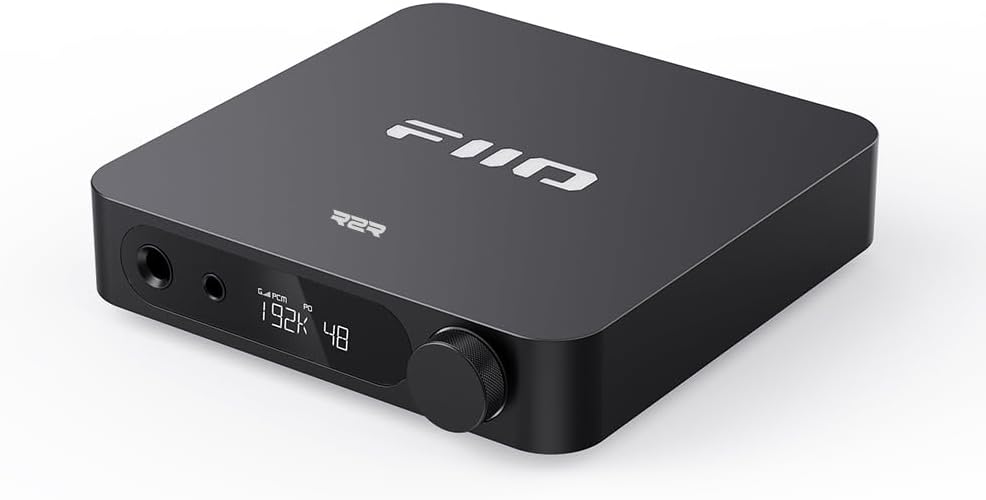
The FiiO K11 R2R is a compact desktop DAC and headphone amplifier for listeners who want more control over decoding and presentation. It has a 4.5 rating and is built around a four-channel fully differential 24-bit R2R resistor array, with 192 high-precision ultra-thin-film resistors across the channels. For the KZ Castor Pro, the important benefit is not simply a larger device but the ability to switch between non-oversampling and oversampling modes, creating meaningfully different ways to hear the same IEM.
We may earn a commission when you buy through this link, at no additional cost to you.
In NOS mode, the K11 R2R preserves the original sampling rate and is described as the more musical presentation. OS mode processes signals at 384kHz and is positioned as the clearer, more detailed option. The amplifier section uses Ti OPA1642 low-pass filters, dual SGM8262 operational amplifiers, and a claimed output rating up to 1300mW per channel. Three gain levels make it easier to pair with sensitive earphones, while the 4.4mm balanced and 6.35mm single-ended outputs cover two common wired configurations.
The principal limitation is portability. It requires a dependable USB connection and the included external 12V supply, making it a stationary system rather than a travel accessory. It also cannot use a 3.5mm plug without an appropriate adapter because the single-ended socket is 6.35mm. Users who value app equalization or a pocket-sized form will find more suitable options in the Dawn PRO 2 and Allegro Mini.
For a KZ Castor Pro home system, the K11 R2R is the premium recommendation. It offers the most deliberate architecture in this guide, robust desktop amplification, and a simple NOS-versus-OS choice that makes A/B comparison easy. It is best for listeners who want to compare the Castor Pro's bass-forward tuning with a cleaner, less colored upstream presentation, and who appreciate having enough power to share the system with full-size headphones.
NOS and OS modes make the K11 R2R especially useful for evaluating how much processing changes the Castor Pro. Keep the source and volume consistent, switch modes at matched levels, and note whether the OS presentation sounds more articulate or simply different.
Although it is called compact, this is still a desk unit rather than a dongle. Its advantage is electrical performance and power delivery, including enough output to serve demanding full-size headphones without moving up to a much larger desktop amplifier.
We may earn a commission when you buy through this link, at no additional cost to you.
The KBEAR TC06 offers one of the most straightforward ways to place a dedicated converter between a source and the KZ Castor Pro. It has a 4.2 rating and combines a TKT02H20 digital audio decoding chip with an independent OPA97220 headphone amplifier. Both 3.5mm single-ended and 4.4mm balanced outputs are included, while the aluminum body weighs less than ten grams and draws power directly from the connected device.
We may earn a commission when you buy through this link, at no additional cost to you.
The TC06 supports PCM audio up to 32-bit/384kHz and is designed to provide more output control than a basic phone connector. The independent amplifier stage is especially relevant for higher-impedance earphones, although the KZ Castor Pro itself does not necessarily require an aggressive amount of power. Low output impedance can help maintain consistent behavior, and the built-in low-power management chip is intended to reduce the burden on the source device during extended listening.
Its limitations are straightforward. The 3.5mm and 4.4mm plugs cannot be used at the same time, so the appropriate cable must be connected before playback. There is no app, EQ, or hardware volume adjustment mentioned in the supplied specifications. Some USB-C phones and laptops may also require an additional compatible adapter or cable depending on their physical port and audio-output behavior.
The TC06 is the best budget and travel choice for Castor Pro owners who want dedicated decoding without carrying a large desktop unit. It is easy to recommend because it combines a compact footprint, balanced connectivity, broad source compatibility, and a conventional plug-and-play design. The choice is strongest for users who value size and simplicity over deep tone control, while the Dawn PRO 2 is the better fit for app-based equalization and finer volume adjustment.
The TC06's direct USB-C connection eliminates the phone's built-in headphone converter from the listening chain. That can be useful when a device's native output is noisy, limited, or inconvenient to operate with the Castor Pro's cable.
Use a 4.4mm cable when the Castor Pro connection is wired for balanced operation, and use a 3.5mm cable for the single-ended path. Check the wiring and source compatibility before buying, because the two outputs cannot be occupied simultaneously.
We may earn a commission when you buy through this link, at no additional cost to you.
The Linsoul Allegro Mini is a portable USB-C DAC and in-ear monitor amplifier intended to bring higher-resolution decoding and useful output options without the bulk of a desktop unit. It has a 4.3 rating, an all-aluminum body, 3.5mm and 4.4mm outputs, and support for PCM up to 32-bit/384kHz plus DSD128. Its clean design makes it a natural companion to the KZ Castor Pro, especially for listeners who carry one IEM and one source cable between home and travel.
We may earn a commission when you buy through this link, at no additional cost to you.
The stated performance figures are reassuring for an IEM-focused device. Total harmonic distortion plus noise is listed at 0.004% at 32 ohms, alongside a wide frequency response and a strong signal-to-noise ratio. The custom decoding chip is designed for stable, uncolored output rather than a heavily emphasized sound signature. USB Type-C connectivity provides straightforward operation with compatible modern Android devices, computers, and other USB-C sources.
The device is deliberately simple. There is no mention of an application, adjustable equalizer, digital volume control, or playback buttons, so the source remains in charge of volume. Its DSD ceiling of DSD128 is also below the DSD256 support listed for several more expensive options. Users who prioritize fine tonal adjustment or maximum format support may prefer the Dawn PRO 2, DEW4X, or K11 R2R.
For a buyer who wants a small, durable, balanced DAC for the Castor Pro, the Allegro Mini is an easy recommendation. It removes the phone's native converter, provides enough connection flexibility for common cables, and avoids unnecessary app complexity. It is best for travel, office listening, and straightforward two-device use rather than for a full desktop ecosystem.
The all-aluminum construction gives the Allegro Mini a durable, premium feel while keeping it suitable for a pocket or small carrying case. Direct USB-C attachment also removes the need for a separate host cable in many modern setups.
With no documented onboard volume control, the Castor Pro will follow the connected phone or computer's level. Keeping the source volume consistent makes comparisons more meaningful and prevents accidental overamplification.
We may earn a commission when you buy through this link, at no additional cost to you.
The FiiO K7 is a desktop DAC and amplifier whose greatest strength is abundant, well-controlled output across demanding headphones. It carries a 4.5 rating and uses two AK4493SEQ DAC chips, dual THX AAA 788+ amplifiers, and a six-stage audio circuit inspired by FiiO's higher-end equipment. It can drive the KZ Castor Pro easily, but its real appeal comes when the same system must also accommodate difficult full-size headphones.
We may earn a commission when you buy through this link, at no additional cost to you.
Connectivity is extensive. Headphone outputs include 4.4mm balanced and 6.35mm plus 3.5mm single-ended connections, while source inputs cover USB, optical, coaxial, and AUX. Input selection, two gain levels, three output levels, and RGB sampling-rate indicators make it easier to manage several sources. The listed balanced output reaches 2000mW with THD+N under 1%, a level that provides substantial headroom for high-impedance headphones.
The downside is size and relative overkill. A KZ Castor Pro system using only a phone or laptop may gain little from a full desktop chassis, and some users may prefer the K11 R2R's more focused sound-character choices. The K7's many inputs also require deliberate setup rather than a single plug-and-play arrangement. A 3.5mm-to-6.35mm adapter is needed if the Castor Pro's standard single-ended plug is used.
The K7 is the right recommendation for a multi-headphone desktop or a system that prioritizes maximum balanced power. It gives the Castor Pro a stable, high-end source and can remain useful after the listener graduates to larger headphones. For a smaller setup, the K11 R2R offers a more compact desktop design, while portable users should look to the TC06 or Allegro Mini.
The K7's 2000mW balanced output gives it much more scope than an IEM-only amplifier. It is a smart choice when the Castor Pro shares a desk with demanding over-ear models or when the listener wants one device to remain useful for years.
USB handles lossless computer audio, while optical, coaxial, and AUX inputs broaden the device's role. Select the gain and output level carefully for each connected headphone, and use the indicators to confirm the intended source and sampling state.
We may earn a commission when you buy through this link, at no additional cost to you.
The LEAUDIO TRN Black Pearl is a portable USB DAC aimed at listeners who want both flexible outputs and software tone adjustment. It has a 4.2 rating, uses dual CS43131 chips, and supports PCM up to 32-bit/384kHz as well as DSD64, DSD128, and DSD256. Its 3.5mm single-ended and 4.4mm balanced outputs make it a practical companion for the KZ Castor Pro, provided the selected cable is compatible.
We may earn a commission when you buy through this link, at no additional cost to you.
The standout feature is its eight-band equalizer through the WALK PLAY app. This gives users a way to shape the Castor Pro's presentation in software rather than relying only on the IEM's four physical tuning switches. Recording support is also listed, potentially useful for capturing playback or monitoring. Multi-function buttons provide basic physical operation, reducing the need to reach for a phone whenever a straightforward control changes are required.
As with many app-dependent products, the software experience is central to the value proposition. A failed connection, limited host compatibility, or an unfamiliar EQ workflow can add friction. The supplied information does not describe a hardware volume wheel, so level adjustment may depend on the connected source or app. The KBEAR TC06 is simpler, while the Dawn PRO 2 provides a more professionally oriented parametric interface.
The Black Pearl is best for a listener who wants the Castor Pro's already flexible tuning controls supplemented by a conventional graphic EQ. It supports high-resolution decoding and balanced output without becoming a large desktop device. Choose it when app-based correction is more important than a minimal control surface, and compare its sound carefully with the hardware-based choices before settling on a permanent setup.
The eight-band EQ can complement the Castor Pro's switch-based profiles, but changes should be introduced gradually. Save one software curve for each hardware setting so bass, midrange, and treble adjustments remain easy to compare without rebuilding the profile each time.
Recording support broadens the device's usefulness beyond uninterrupted listening, while the multi-function buttons provide direct access to common operations. Verify that the intended recording application recognizes the device before relying on the feature for a specific workflow.
We may earn a commission when you buy through this link, at no additional cost to you.
The FiiO KA11 is a tiny USB-C DAC and headphone amplifier that emphasizes compactness, efficient conversion, and broad device compatibility. It has a 4.1 rating, weighs about 8.5 grams, measures only 44 by 9.7 by 10.5mm, and uses a CS43131 chip to support PCM audio up to 32-bit/384kHz. It is a natural pocket companion for the KZ Castor Pro when a lightweight single-ended setup is preferred.
We may earn a commission when you buy through this link, at no additional cost to you.
The specified output reaches 245mW at 16 ohms and 200mW at 32 ohms, giving it more headroom than many similarly tiny adapters. The listed THD+N below 0.0006% and signal-to-noise ratio of 125dB indicate a low-noise design, while the 3.5mm socket keeps connection requirements familiar. A USB Type-C or Lightning version can suit different phones and tablets, while compatibility with Windows and Mac expands the use case.
The main limitation is the absence of a balanced 4.4mm output. Listeners focused on balanced operation will find more options among the TC06, Allegro Mini, Dawn PRO 2, and DEW4X. Another drawback is that the documented UAC1.0 mode for devices such as the Switch and PS5 must be switched in the FiiO Control app, adding a setup step for gaming users.
The KA11 is a straightforward recommendation for mobile Castor Pro listening when low weight and simple 3.5mm connectivity matter most. It provides dedicated high-resolution decoding and adequate output for demanding IEMs without occupying much bag space. It is less suitable for a balanced-first system or a user who wants tone controls and onboard volume, but it remains a highly practical travel adapter.
The KA11 combines a low-mass aluminum body with output figures that exceed many basic adapters. This makes it suitable for users who want a dedicated converter but do not need a larger portable device with balanced sockets.
The documented UAC1.0 mode can provide low-latency operation with compatible game consoles after the FiiO Control app is used to enable it. For ordinary music playback and phone listening, the standard mode remains the straightforward path.
We may earn a commission when you buy through this link, at no additional cost to you.
The CX31993 USB-C DAC is a single-ended headphone adapter distinguished by clear specifications and an included USB-A adapter. It has a 4.5 rating and combines a CX31993 decoding chip with a MAX97220 output stage, supporting PCM audio up to 32-bit/384kHz. For KZ Castor Pro owners, its most useful feature may be practical source compatibility rather than an audiophile feature checklist.
We may earn a commission when you buy through this link, at no additional cost to you.
The included USB-A interface allows the adapter to work with laptops, desktops, tablets, Android devices, iPads, MacBooks, and car stereos that may not expose a convenient USB-C headphone output. The stated 3.5mm output delivers 63mW at 32 ohms, with a frequency response of 20Hz to 40kHz and a claimed 16-600 ohm impedance range. THD+N is listed as low as -95dB, signal-to-noise ratio exceeds 115dB, and dynamic range exceeds 111dB.
Construction receives attention. The body is made from anodized aviation-grade aluminum, and the cable uses eight-strand single-crystal copper with silver plating and gold-plated connectors. The stated cable has passed more than 15,000 flexure tests and is designed to resist twisting and tangling. These details may matter more to daily users than additional format support.
The limitation is that the adapter offers only a 3.5mm output, so it cannot exploit a balanced Castor Pro cable. Its 63mW output is modest compared with the KA11, Dawn PRO 2, or K11 R2R, although it remains practical for the Castor Pro and many ordinary earbuds. It is best for frequent cross-device use where the included USB-A adapter prevents cable inconvenience.
The included USB-A adapter makes it easier to use the same DAC with a USB-A computer and a USB-C phone. Keep the appropriate adapter attached when moving devices so the setup remains ready for use.
The adapter emphasizes low noise, wide dynamic range, and a broad supported impedance range. For the Castor Pro, the clean 3.5mm path is the central attraction, while listeners seeking balanced operation should select a model with a 4.4mm socket.
We may earn a commission when you buy through this link, at no additional cost to you.
The CCA KZ Castor Pro is not a DAC, but it is the essential reference for this roundup because its performance and tuning behavior determine which external converters are most useful. It carries a 4.5 rating and uses two 10mm dynamic drivers: one dedicated to low frequencies and an upgraded unit for the mid-high range. An electronic crossover blends the drivers into a coherent full-spectrum presentation.
We may earn a commission when you buy through this link, at no additional cost to you.
Its most relevant feature is four tuning switches controlling low and high frequencies, allowing 16 sound profiles. This makes it possible to compare a cleaner upstream DAC with different Castor Pro voicings, from a bass-forward configuration to one with smoother mids and highs. A DAC cannot change the earbud's physical tuning, but a low-noise converter can reveal subtler differences between the switch settings and make volume control more consistent.
Because the Castor Pro already provides substantial tonal control, a complicated DAC with a deep equalizer is not automatically the best partner. A transparent converter with accurate level control may be preferable, while a bass-focused source could exaggerate the low-frequency switch's impact. The product also includes a dedicated low driver intended for deep but defined bass, meaning a high-output amplifier is helpful mainly for preserving dynamics rather than creating additional bass extension.
The Castor Pro is best paired with a DAC that offers clean decoding, suitable output impedance, and accurate volume adjustment. The Dawn PRO 2 is the most flexible match, the K11 R2R offers a premium desktop comparison, and the TC06 is the convenient portable option. With this IEM, methodical A/B listening matters more than chasing a long list of numerical specifications.
The four switch combinations allow direct control over the earbud's low and high response. Begin with a neutral-looking setting, compare the same track across all profiles, and keep source level and playback conditions consistent for the fairest result.
A dedicated DAC mainly affects the source and output stage rather than the Castor Pro's drivers. Cleaner conversion, lower noise, and finer volume adjustment can improve consistency, but the largest tonal differences will still come from the earbud's physical switches.
We may earn a commission when you buy through this link, at no additional cost to you.
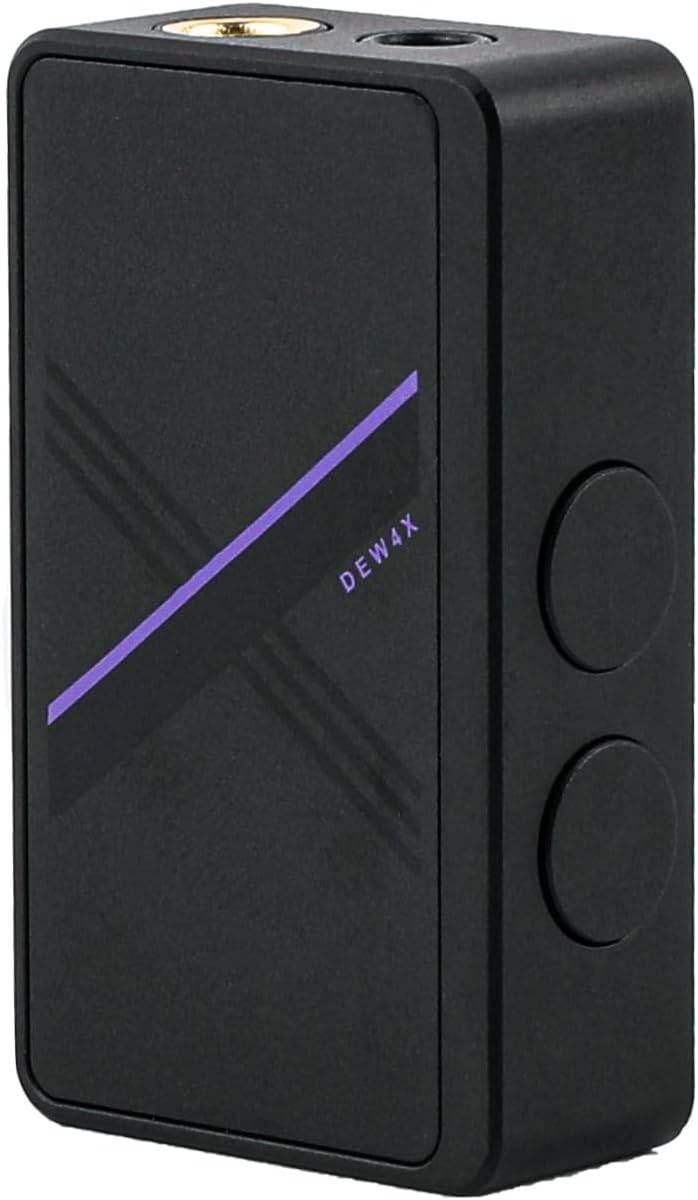
The Linsoul DEW4X is a portable DAC and in-ear monitor amplifier built around dual CS43198 chips, extensive output control, and a more substantial metal body than a simple dongle. It has a 4.5 rating, supports PCM up to 32-bit/384kHz and DSD256, and offers both 3.5mm single-ended and 4.4mm balanced outputs. The specification set makes it a strong match for the KZ Castor Pro when balanced listening and low background noise are priorities.
We may earn a commission when you buy through this link, at no additional cost to you.
Signal purity is the DEW4X's defining feature. Dynamic range is listed at 130dB, signal-to-noise ratio at 130dB, and distortion as low as 0.0002% at the balanced output. The device includes filtering circuits intended to suppress power noise and interference, plus an oxygen-free copper-wound shielding layer. A replaceable cable design adds longevity, while the standard Type-C-to-USB connection and optional Lightning interface provide source flexibility.
Controls are unusually useful for a portable unit. The 30-level volume adjustment uses a non-linear progression, allowing finer changes at lower settings, and the selected level is remembered after power-off. The UAC1.0 standard supports compatible devices, and the buttons provide straightforward operation. The main drawbacks are physical bulk relative to ultra-compact adapters and the need to obtain the correct interface cable for Apple devices.
The DEW4X is an excellent all-around portable partner for the Castor Pro because it combines high-resolution decoding, balanced output, low distortion, and convenient volume memory. It is especially attractive for users who want more than a basic adapter but do not need a full desktop system. The Dawn PRO 2 may appeal more to app-based equalizer users, while the DEW4X focuses on physical controls and refined hardware performance.
The DEW4X's low distortion, high signal-to-noise ratio, and balanced output are well suited to revealing the Castor Pro's quieter details. Use the balanced connection with a correctly wired cable to realize the full benefit of the clean output path.
The 30-level, non-linear control makes it easier to return to a familiar setting and provides finer adjustment where the Castor Pro's loudness changes would otherwise be abrupt. Remembered levels are particularly helpful when moving between music, video, and calls.
We may earn a commission when you buy through this link, at no additional cost to you.
The right DAC for the KZ Castor Pro should improve source quality without adding complexity, incompatibility, or exaggerated output. Connection format, decoding, amplification, and intended listening environment are the most important factors.
A 4.4mm balanced output can offer a cleaner dual-channel path when used with a properly wired cable, but it requires compatible hardware and careful connector selection. A 3.5mm output is more universal and works with the Castor Pro's conventional single-ended connection, often through a 6.35mm adapter for desktop units. Do not assume every product with a balanced socket can drive the earbud correctly or that a cable advertised as balanced is wired properly at both ends.
Choose 4.4mm when your cable and source support it and you value a dedicated balanced path. Choose 3.5mm when simplicity, broad compatibility, and fewer cable variables matter most.
PCM up to 32-bit/384kHz is common among the products reviewed and provides a useful ceiling for compatible high-resolution files. DSD support varies from DSD128 to DSD256, and the K11 R2R requires its DSD output mode to be set to native before DSD256 is internally converted for R2R processing. More advertised format support does not automatically guarantee a more satisfying result, particularly when the source material itself is not high resolution.
Match the decoder to the files and ecosystem you actually use. For most listeners, reliable PCM playback and clean output matter more than chasing every supported format.
The KZ Castor Pro is a dual-dynamic IEM, so it does not need the enormous output available from a full desktop amplifier. Nevertheless, adequate voltage and low output impedance help preserve dynamics and control when the earbud is paired with a long or unusual cable. The FiiO K7 is designed for much more demanding headphones, while portable products such as the KA11 and TC06 prioritize efficiency and compactness.
Treat high wattage as useful headroom rather than a guarantee of better sound. The correct level for the Castor Pro should feel controlled, quiet, and free of strain.
A thumb-drive-style USB-C adapter is the easiest device to carry, while a compact unit with a larger body may offer stronger hardware, cooling, and physical controls. The Allegro Mini and TC06 are minimal dongles, the Dawn PRO 2 and DEW4X are more substantial portable devices, and the K7 and K11 R2R belong at a desk. Weight, cable management, and the need for an external power supply all affect convenience.
Choose the smallest unit that still provides the outputs and controls you need. If the DAC rarely leaves the desk, a larger enclosure may be worthwhile, but it should not create cable clutter.
Accurate volume control can be more valuable than extra app features. The Dawn PRO 2 has a 100-level control, the DEW4X has a remembered 30-level non-linear adjustment, and the K11 R2R uses a precision digital volume chipset. Devices without onboard volume controls remain usable, but they depend on the source's level control, which may be coarse or inconsistent. App equalizers can help, although excessive correction can obscure the Castor Pro's own tuning.
Prioritize clean hardware level control if you change sources frequently. Use software EQ sparingly and preserve enough flexibility to compare the Castor Pro's physical tuning settings.
USB-C is the dominant connection across this roundup, but real-world compatibility depends on the phone, tablet, or computer. The KA11 offers USB Type-C and Lightning variants, the DEW4X supports an optional Lightning cable, and the CX31993 model includes a USB-A adapter. Some devices require an adapter for data as well as charging, while app-based controls require a compatible host application. Gaming-oriented UAC1.0 modes may also need to be selected manually.
Check the exact source before buying. Confirm its physical port, operating system, app requirements, and whether the desired output format is exposed to the operating system.
A DAC built specifically for IEMs is optimized for compactness and efficient amplification, while a desktop DAC/amplifier is useful for sharing outputs with full-size headphones. The FiiO K7 can drive demanding models and includes several source inputs, while the K11 R2R also provides desktop power but concentrates on two listening modes. The KZ Castor Pro does not require a large amplifier, so the best choice is usually determined by how the rest of the system is used.
Build around your listening habits. Choose a portable model for phones and travel, or a desktop model if the DAC will also serve larger headphones and multiple source components.
Low distortion, low noise, stable output, and accurate volume are valuable foundations, but software features should be evaluated separately from core audio performance. A complicated equalizer does not compensate for a poor fit or an unsuitable source, and a large specification number does not reveal how a device sounds with the Castor Pro. The most meaningful comparison uses the same source, track, level, and cable while changing only the DAC.
Prioritize a clean, reliable signal path first. Add EQ or app control only when it supports a specific listening goal rather than because a menu offers more options.
Begin by identifying the source, its physical connection, and the wiring of your Castor Pro cable. Connect the DAC directly to the selected phone, tablet, or computer, then attach the appropriate 3.5mm or 4.4mm plug. Start at a low volume, confirm that the correct output is active, and raise the level gradually. On products with a physical volume control, use that control rather than changing the phone's level repeatedly, since abrupt source-volume steps can make comparisons less consistent.
For meaningful A/B testing, keep the source file, playback application, volume, and earbud position constant. If the Castor Pro has multiple tuning switches, record the selected positions and compare each with the same track. Avoid large EQ cuts or boosts at first, because they can change perceived balance enough to obscure the DAC's contribution. On app-enabled units, save separate profiles for the different Castor Pro switch combinations and update them only when the phone's system audio settings have been configured correctly.
Treat the DAC as portable electronics rather than a disposable adapter. Avoid moisture, crushing pressure, and repeated bending of the USB-C plug. Keep the output jack free of lint, and do not insert or remove a cable while the device is actively playing. When a unit uses an external desktop power supply, use the specified supply and allow ventilation around vents. Check current format and output settings before each major listening session, since firmware or app updates can alter available options.
Not necessarily. The Castor Pro can be used with many phones, computers, and other sources through a compatible 3.5mm or 4.4mm connection. A dedicated DAC can be worthwhile when the source has a limited headphone output, noisy circuitry, inconvenient volume control, or lacks a suitable connection. The improvement will generally be more noticeable in consistency and control than in a dramatic change to the earbud's fundamental tuning.
Choose a 3.5mm connection for broad compatibility and a simpler setup. Choose 4.4mm only when the DAC supports balanced output and the entire cable is wired correctly for balanced operation. A balanced DAC and an unbalanced cable do not create a balanced path, and a wrongly wired balanced cable may prevent operation. Check the pin configuration of the cable and source before ordering.
It can be useful if the source supplies genuine high-resolution PCM files, but resolution numbers do not automatically transform ordinary recordings. The audible result also depends on the DAC implementation, the source, the earbud tuning, and the file itself. A clean converter with accurate volume control is often a more valuable upgrade than selecting a device based solely on its maximum sampling-rate label.
Choose portable if you listen primarily with a phone, tablet, or laptop and value a compact setup. Choose desktop if you want multiple inputs, stronger amplification, additional controls, or a device that can also drive full-size headphones. The Castor Pro does not require desktop-level power, so portability is a valid reason to select a smaller model.
No. The Castor Pro already includes four tuning switches that create 16 profiles by changing its low- and high-frequency settings. A DAC equalizer can provide more precise adjustment, but it is optional and should be used carefully. Large software corrections can shift the balance substantially, so listeners often benefit more from comparing the hardware switch positions with a clean, uncolored source.
A DAC does not alter the earbud's physical bass tuning, although output and system matching can affect perceived dynamics and control. The Castor Pro's dedicated bass driver and tuning switches are the main tools for changing bass emphasis. A cleaner upstream path may make those differences easier to hear, but it cannot reproduce bass frequencies the IEM cannot generate.
Use the same source, file, playback settings, cable, and listening level, then change only the DAC. Match output configurations so a balanced option is not compared directly with a different connection path unless that is the intended test. Listen to familiar tracks across vocals, bass, strings, and cymbals, and take notes rather than relying on a brief first impression. A short break can also prevent listener fatigue from being mistaken for a hardware difference.
Confirm that the source supports USB audio output and examine whether the port handles data as well as charging. Check whether the host device requires a specific app, whether a Lightning or USB-A adapter is needed, and whether the desired balanced connection uses the correct 4.4mm wiring. Also verify the available output jacks, volume controls, format support, and operating-system requirements against your listening setup.
The MOONDROP Dawn PRO 2 is the strongest all-around portable match because it combines dual CS43198 decoding, both common output formats, precise volume adjustment, and a capable app equalizer. The FiiO K11 R2R is the premium desktop choice, offering a fully differential R2R architecture and selectable NOS and OS modes, while the KBEAR TC06 provides the most approachable compact upgrade.
For most Castor Pro users, prioritize the connection you will actually use, a clean output stage, and accurate volume control. A balanced socket is useful only with a compatible source and properly wired cable, and extra format support matters less than a reliable connection to the devices in your daily routine. Use the IEM's tuning switches as the main tonal control, then let the DAC provide a stable and clean source.
Before buying, verify the current output, app, cable, and source-device requirements, and check the latest product details and price at the time of purchase. Prices and availability can change, but the feature-based recommendations remain a practical guide to building a cleaner and more flexible KZ Castor Pro listening system.