
2A DC Power Cable
5.0Editor score
Two cables per pack
5521 female to XLR
12V and 5A rating
Explore the best Ebike Charger Adapter Cable Plugs, comparing connector types, compatibility, cable design, power ratings, safety features, and charger support.
Ebike charger adapter cable plugs make it easier to connect a charger to a battery with an unfamiliar port. A useful adapter matches both connector geometry and the charger’s electrical requirements, so buying based on appearance alone can lead to poor fit, unstable charging, or damage. Compatibility is therefore the central consideration in this guide.
The ten products below cover adapter-only sets, complete replacement chargers, charging sockets, and extension cables intended for electric bicycles, scooters, balance bikes, and related devices. We compared the published connector formats, cable gauges and lengths, voltage or current information, included protection features, environmental claims, and the level of documentation supplied with each product.
Each review explains the strongest application for the product while also identifying limits stated in its specifications. The first three products earn the featured awards, but the complete ranking shows why a cable-only adapter may make more sense than a replacement charger for some riders. Product availability, charger requirements, and prices can change, so verify the current listing and your battery specifications before purchasing.
5.0Editor score

4.4Editor score

4.7Editor score
The comparison covers connector versatility, electrical specifications, physical design, and intended use across all ten listings, from compact cable adapters to complete 48V replacement chargers.


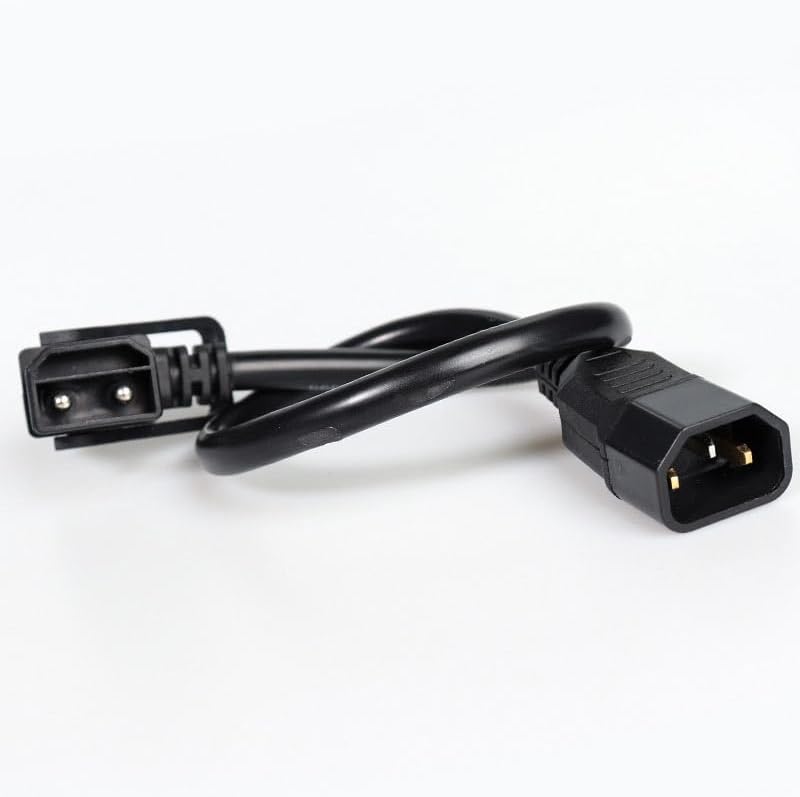


The Electric Bikes Balance Bikes Scooter Charger Adapter Cable Set is a 7-in-1 collection of short adapter cables with a 4.4 rating. Its primary appeal is connector coverage: the set includes a 5.5mm x 2.1mm female connection and adapters for 5.5mm x 2.5mm, 8.0mm x 1.6mm, three-pin XLR male, M12, M16, RCA, and a three-prong plug male configuration. That makes it a practical option for riders who own more than one type of electric bike, scooter, or balance bike.
We may earn a commission when you buy through this link, at no additional cost to you.
Each cable measures 15cm, creating a compact kit that can live in a saddlebag, compartment, or toolbox without adding much bulk. The range of tip formats is more useful than a single fixed adapter because charging ports vary even among products sold for similar riding categories. The listing describes the connectors as durable, portable pieces intended to maintain reliable links with compatible chargers and power supplies.
The important limitation is that seven formats do not make every connector electrically interchangeable. Plug geometry only solves the physical connection; the charger still needs an appropriate output voltage, current rating, and center-positive or center-negative configuration for the device. The listing also does not publish a current or wattage rating for the individual adapters, so riders with an unfamiliar electrical specification should verify those details before relying on the set.
This is the strongest general-purpose adapter set for someone who wants several connection options without replacing a working charger. It is especially appealing for households with mixed electric-bike or scooter equipment. It is less suitable for a rider who needs documented high-current charging, waterproof field repair, or one specific nonstandard connector that the set does not include.
The broad mix of barrel, XLR, RCA, M12, M16, and three-prong formats lets owners match several common charging ports without assembling a complicated collection of separate leads. The individual 15cm cables also make it easier to identify and carry only the adapters currently needed.
Because the product is an adapter set rather than a complete charger, it can complement a charger that already provides the correct electrical output. Keeping the short leads in a storage pouch offers a practical backup when traveling with several compatible battery systems.
We may earn a commission when you buy through this link, at no additional cost to you.
The Qoovi 5 in 1 Universal Charger Plugs for Electric Scooter Chargers Connector is designed around a 5.5mm x 2.5mm base connection and carries a 3.6 rating. Its converter collection includes 5.5mm x 2.1mm, 8.0mm RCA, 8.0mm mini three-prong, 12.0mm standard three-prong, and 18.0mm Cannon XLR formats. The listing specifically names Ninebot, Gotrax, Razor, Voyage, Jetson, Pocket Mod, and Sports Mod applications.
We may earn a commission when you buy through this link, at no additional cost to you.
One of the set's strongest technical details is the use of an 18AWG thickened pure-copper core. The listing states that the cable resists tangling, abrasion, and weather damage, survives more than 5,000 bend cycles, and uses hardened stainless-steel connectors and fire-resistant alloy terminals. It also states that the set can support charging up to 300W when paired with a compatible charger, making the stated construction more relevant to high-power setups.
However, the product has a notable exception: despite listing a 5.5mm x 2.1mm converter among the included formats, the compatibility note says the base cable does not fit a 5.5mm x 2.1mm connector. That inconsistency makes close reading of the current listing essential. The 3.6 rating also suggests that buyers should look for recent customer feedback rather than assuming the durability and compatibility claims will be equally satisfactory for every device.
This set is worth considering for a scooter owner whose battery uses one of the larger three-prong, RCA, or XLR connectors and who has a compatible 5.5mm x 2.5mm charger. It is not the first choice for a 5521-based system, a low-current accessory lead, or anyone who cannot confirm the base connector and polarity before connecting it.
The stated 18AWG copper core and 300W support make this set more interesting for higher-powered scooter charging than a lightweight unrated adapter. Actual performance still depends on the connected charger, battery, and correct polarity.
The listing mentions a 5.5mm x 2.1mm converter but separately states that the product does not fit a 5.5mm x 2.1mm connector. Buyers should inspect the photos, dimensions, and current instructions to determine exactly how that converter is intended to be used.
We may earn a commission when you buy through this link, at no additional cost to you.
The Charging Socket for E-Bike Battery Charger with Universal Three Hole 12AWG Electric Vehicle Connector Plug has a 4.7 rating, making it one of the strongest-rated products in this guide. It is designed for standard e-bike, e-scooter, and electric-vehicle battery chargers that use a compatible three-hole charging interface. Unlike an all-purpose short adapter, it includes a 45cm plug cable and a 20cm socket cable.
We may earn a commission when you buy through this link, at no additional cost to you.
The specified 12AWG pure-copper conductors are the main technical attraction. The listing says the thicker wiring reduces voltage loss and heat generation, while the connector housing is described as abrasion resistant, water resistant, insulated, and flame retardant. Those characteristics make the product look more appropriate for a permanent repair, custom harness, or charging port installation than a disposable travel lead.
A 12AWG conductor is not automatically safe for every charger. The adapter still needs to match the charger's output, the battery's charging protocol, the connector configuration, and the polarity. The product listing does not provide a wattage, current, or voltage range, so the absence of those figures should be considered when assessing fit. It is also a wired charging interface rather than a universal collection of tips.
This is the premium choice for a technically confident rider who values heavy wiring and environmental resistance or needs a replacement charging socket with attached leads. It is less convenient for someone who simply wants a quick barrel-plug-to-XLR travel adapter. Confirm the physical port, electrical ratings, and installation method before modifying an e-bike charging system.
The 12AWG copper construction gives this socket a more substantial feel than a typical lightweight adapter lead. It is especially relevant when creating a permanent harness or replacing a worn socket on a compatible charging port.
Separate 45cm and 20cm cables allow more routing flexibility than a 15cm travel adapter. The longer lead can bridge a gap between a charger and battery, while the shorter cable may suit a compact installation or custom enclosure.
We may earn a commission when you buy through this link, at no additional cost to you.
The 2A DC Power Cable is a two-pack of 15cm adapters connecting a 5.5mm x 2.1mm female DC barrel to a three-pin Cannon XLR male plug. Its listed rating is 5.0, the highest numerical rating in this roundup, though that figure should not be treated as a substitute for checking the actual charging-device requirements. The product is aimed at balance bikes, electric scooters, skateboards, yo-yo scooters, and some e-bikes.
We may earn a commission when you buy through this link, at no additional cost to you.
The electrical specification is unusually clear for an adapter in this category: 12V, 5A, and 22AWG wire. Soft PVC construction is described as bendable, while the female socket connection is intended to fit tightly and resist accidental disconnection. The product also emphasizes a plug-and-play design, meaning it is intended to be used without modifying the charger or device.
Its focused scope is the main trade-off. Riders with a 5.5mm x 2.5mm, RCA, three-prong, or other charging port will need a different adapter, and the stated 12V limit rules out use with common 36V or 48V e-bike battery chargers. The listing also does not provide a broader ingress-protection rating, so it should not be assumed to be weatherproof.
This is a good budget pick for a compatible 12V balance bike or smaller electric ride that uses a three-pin XLR charging connection. The two-pack allows one cable to remain in a bag while another stays with the charger. It is best suited to simple indoor charging or protected storage rather than exposed, high-power e-bike charging.
Including two identical cables gives owners a spare for travel, storage, or replacement. That makes the set more useful than a single adapter when a short lead is exposed to repeated bending or handling.
The listed 12V, 5A, and 22AWG specifications make the operating envelope easier to understand. They also clearly separate this cable from 36V and 48V e-bike charging systems, reducing the chance of an inappropriate connection.
We may earn a commission when you buy through this link, at no additional cost to you.
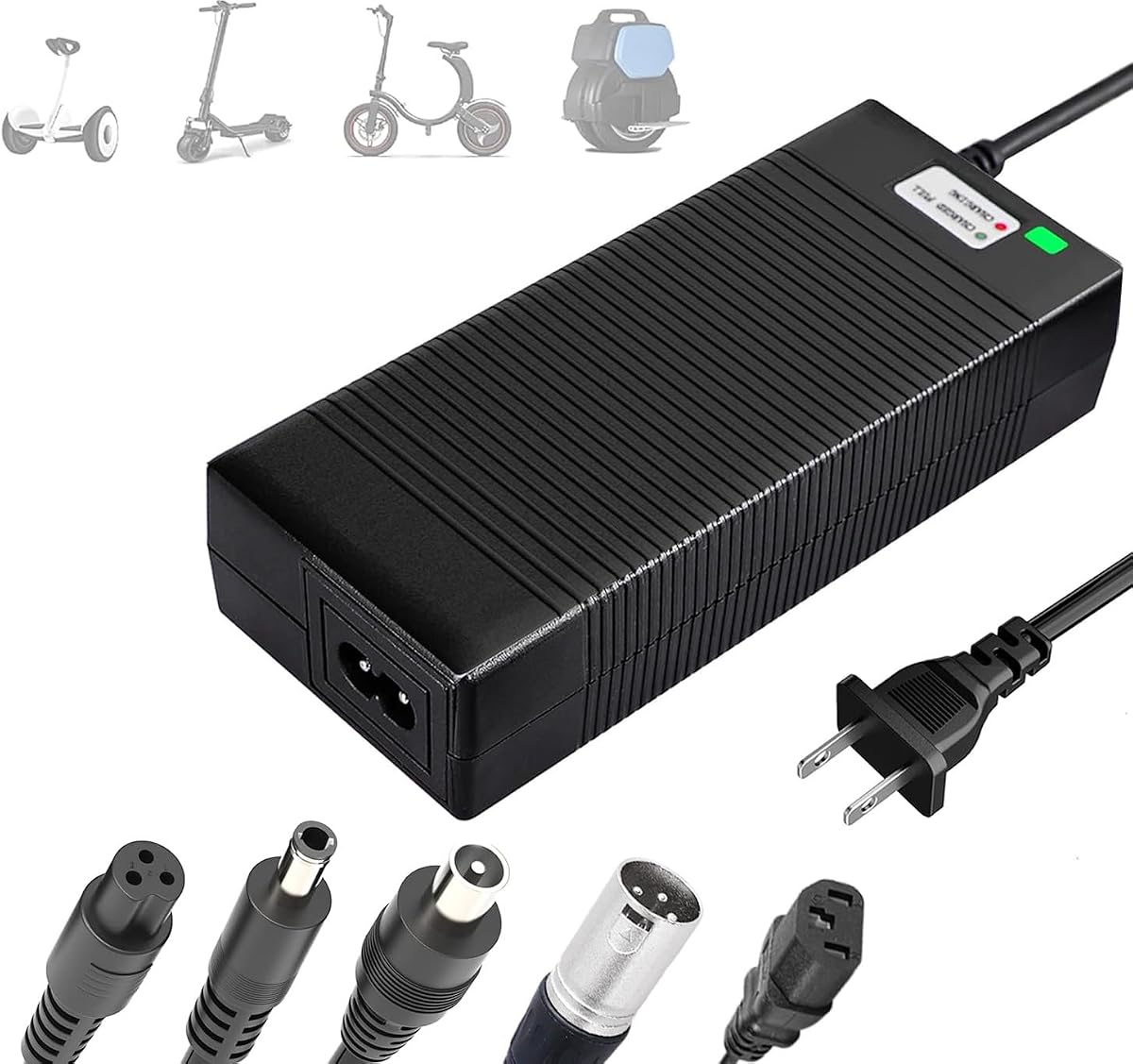
The EVAPLUS 54.6V Safe Charger for 48V Lithium Batteries is a complete charger with a 4.4 rating. It is designed for 48V lithium batteries used in electric bikes, scooters, and other compatible devices. The output is 54.6V, the level commonly associated with charging a 48V lithium-ion pack, and the included DC connection supports 5.5mm x 2.5mm and 5.5mm x 2.1mm formats.
We may earn a commission when you buy through this link, at no additional cost to you.
Its strongest selling point is the stated UL certification and built-in protection against over-voltage, over-current, and short circuits. It also has an automatic shutoff when the battery reaches full charge. A red LED indicates active charging and a green LED indicates a completed charge, while a 100V-240V AC input makes the unit suitable for use in many countries with appropriate local plugs.
The listing says most compatible 48V 13S batteries can charge from empty to full in approximately four to six hours, although actual charging time depends on battery capacity, condition, temperature, and the charger's output current. Importantly, the product is for 48V lithium systems, not lead-acid packs or lower-voltage batteries. Buyers should also verify the barrel dimensions and polarity rather than relying only on the broad 48V description.
This charger is a sensible option for someone with a 48V lithium battery and a 5.5mm barrel connection who wants a complete unit with visible charging status and stated safety protections. It is less attractive to riders whose battery uses a proprietary, RCA, XLR, or three-prong interface, or whose battery chemistry and cell configuration are not confirmed.
The two-color LED system makes it easy to tell whether the charger is actively working or the battery is full. That removes the need to guess from charger noise, brightness, or a separate voltage display.
A 100V-240V input makes the charger adaptable to many regions without requiring a voltage converter. The actual plug still needs to suit the outlet, and travel use should be planned around local electrical and battery-safety rules.
We may earn a commission when you buy through this link, at no additional cost to you.
The 54.6V 2A Ebike Electric Scooter Charger is a replacement charger that has a 4.3 rating. It produces 54.6V at 2A for compatible 48V lithium-ion batteries and includes five adapter plugs intended to improve compatibility across e-bikes and scooters. The listing names Rad Power Bikes, Velotric, Heybike, Juiced, and Ecotric as examples of brands or product families that may be supported when their charging ports match the supplied tips.
We may earn a commission when you buy through this link, at no additional cost to you.
Compared with a cable-only adapter, this product supplies the complete charging system, including charging management and status feedback. Its stated protections cover overcharging, short circuits, over-voltage, and over-current. A solid red LED represents charging in progress, while a solid green LED indicates that the battery is fully charged and ready for use.
The 2A output is a key consideration for owners who need a complete charger but may have an original charger with a different current rating. Battery chemistry, cell count, and manufacturer instructions should take priority over a broad compatibility claim. The listing does not clearly publish the AC input range in the supplied details, so that information should be verified before use in locations with different mains voltage.
This is a strong choice for a 48V lithium e-bike or scooter whose charging port is covered by one of the five included adapters. It is less appropriate for proprietary systems, batteries with different voltage requirements, or riders who only need a small cable conversion. Confirm the charger output, connector dimensions, and battery guidance before replacing a working charger.
The five included plugs give this unit more flexibility than a single-barrel charger. That matters for owners of different e-bike or scooter models who want one charger that can cover several common port formats.
Stated fault protection supports safer charging, while the red and green indicator removes uncertainty about charging state. These features are most useful when replacing a charger whose original status display has become unreliable.
We may earn a commission when you buy through this link, at no additional cost to you.
The 5 in 1 Plugs 54.6V Safe Charger is explicitly restricted to devices with a 48V 13S lithium-ion battery pack. It has a 4.3 rating, a 54.6V 1.5A output, and a 100V-240V input. The listing clearly warns that it is not for 24V, 25V, 29.4V, 36V, 42V, or other battery configurations, nor for lead-acid packs.
We may earn a commission when you buy through this link, at no additional cost to you.
Its connector set includes a 5.5mm x 2.5mm or 2.1mm base plus one-prong DC, 0.47-inch standard three-prong, 18mm RCA, three-pin male XLR, and universal IEC plug options. The charger is UL certified according to the listing, with protection for over-voltage, over-current, short circuits, and temperature. A red light indicates charging and a green light indicates a full charge.
The narrow battery specification is a strength for informed buyers because it reduces ambiguity. It is also a clear warning: a 48V label alone does not establish that every pack is a 13S lithium system. A scooter with a 48V lead-acid battery, for example, would not be an appropriate application despite sharing a nominal voltage label. The 1.5A output may also take longer than higher-current chargers for some packs.
This product fits riders who have positively identified a 48V 13S lithium battery and one of the supported connector formats. It is less suitable as an all-purpose household charger or for anyone who cannot verify their battery chemistry, cell configuration, and charging-port design before purchase.
The product does not pretend to support every 48V battery. Stating the exact 13S lithium-ion requirement and excluding lead-acid chemistry is valuable information for a component where an incorrect match can create serious safety risks.
The stated protection suite addresses over-voltage, over-current, short-circuit, and temperature conditions. Together with certification and automatic maintenance after charging, it presents a more complete safety profile than a passive connector alone.
We may earn a commission when you buy through this link, at no additional cost to you.
The Electric Vehicle Charger Connector Adapter 2+6 E-Bike Charging Interface Replacement Plug Socket with Wire(F) is a specialized replacement interface for electric vehicles. Unlike the multi-tip products in this guide, it focuses on one defined 2+6 connector arrangement and includes a plug, socket, and wire. That narrower approach can be appropriate when a specific charging port has been damaged and the original connector format is known.
We may earn a commission when you buy through this link, at no additional cost to you.
Its main benefit is repairability. Replacing a worn or cracked charging interface can restore access to a compatible charger without replacing an entire battery or scooter system. A wired design also allows the connector to be positioned according to cable routing needs, provided the installation does not create strain or interfere with moving parts.
The limited product information is significant. The supplied listing does not state a voltage, current, cable length, conductor size, material, ingress rating, or polarity. It also has no available customer rating, so there is no numerical history to help assess long-term consistency. The designation at the end of the title appears to identify the female connection, but buyers should confirm the corresponding plug and socket arrangement visually.
This adapter is best suited to a technician or experienced rider who has already identified the exact 2+6 interface and knows the vehicle's electrical specifications. It is not a good universal choice or a substitute for a safe replacement charger. Matching the connector by appearance is insufficient; the current draw, charger output, and battery charging requirements must also be confirmed.
A dedicated replacement interface is useful when damage is confined to the charging port and the vehicle's charger still functions. It avoids the need to replace an entire electrical assembly when only the connector is worn.
The sparse specifications make this one of the least straightforward choices for an unfamiliar installation. Confirm connector dimensions, wire requirements, pin arrangement, current handling, and manufacturer guidance before cutting, soldering, or routing the leads.
We may earn a commission when you buy through this link, at no additional cost to you.
The Electric Bike Charger 48V, 54.6V 2A Charger is a five-plug replacement charger with a 4.2 rating. It supports 48V lithium-ion battery packs and lists electric bicycles, scooters, and one-wheel devices among its intended applications. Its 5.5mm x 2.5mm one-prong plug is supplemented with 8mm mini three-prong, 12mm standard three-prong, 8mm RCA, and three-pin male XLR connectors.
We may earn a commission when you buy through this link, at no additional cost to you.
The listed electrical output is 54.6V at up to 2A, while the input accepts 100V-240V at 50 or 60Hz. The product uses a CC-CV working method, a charging profile that shifts from constant current to constant voltage as the battery approaches full charge. Red and green LEDs indicate charging and completion, and the charger then maintains the battery automatically.
The stated protection includes short-circuit and overload, over-current, and over-voltage protection. These are important features, but they do not expand the charger beyond its specified battery type. The listing explicitly says not to use it with a lead-acid battery pack, and riders should also verify cell configuration, connector polarity, and the original charger's current rating.
This is a flexible all-in-one option for owners of compatible 48V lithium devices, especially those who want one charger for more than one bike or one-wheel setup. It is less suitable for proprietary connectors outside the supplied set or batteries with chemistries other than the stated lithium-ion configuration. The lower 4.2 rating should be considered alongside the otherwise broad feature set.
The five supplied connector formats reduce the need to keep a separate charger for each common 48V device. This is especially valuable for households that own an e-bike, scooter, and compatible one-wheel.
The stated constant-current and constant-voltage method allows the charger to reduce current as the pack reaches full voltage. That controlled final stage is a meaningful feature for lithium-ion battery care when the charger and battery are correctly matched.
We may earn a commission when you buy through this link, at no additional cost to you.
The daier Connector Ebike Waterproof Extension Cable is a two-pin extension set with a 4.6 rating. It is intended for DIY e-bike projects involving lights, throttles, electronic brakes, sensors, displays, motors, and other electrical components. The package includes six two-pin male connectors and six two-pin female connectors, each on a 200mm cable.
We may earn a commission when you buy through this link, at no additional cost to you.
Its IP65 waterproof rating is the defining feature. The listing describes 26AWG pure-copper conductors for stable signal and power transmission, along with a design intended to withstand rainy conditions. The inclusion of both male and female ends allows it to extend existing two-pin connections or serve as a custom repair lead without requiring a separate adapter set.
This is not a charger adapter for the battery's main charging port. It is a wiring accessory for low-voltage e-bike components, and the two-pin format will not create a connection to a barrel, RCA, XLR, or proprietary charging socket. Its 200mm length is useful for small routing changes but may be too short for a full-frame extension without multiple joined leads.
This product is a good fit for a rider making a custom light, throttle, brake, or display connection where weather resistance matters. It is not suitable for replacing a mains charger or connecting a battery pack. The installer should still confirm pin order, wire gauge demands, current requirements, and whether the IP65 rating applies to the complete assembled connection.
An IP65-rated two-pin connection is more appropriate for exposed e-bike wiring than an ordinary non-weatherproof lead. It gives DIY builders a practical way to extend components that may encounter rain, splashes, and routine outdoor vibration.
Six male and six female leads support several repairs without requiring repeated cutting or soldering. The short 200mm length also minimizes excess cable around compact controllers, lights, and display installations.
We may earn a commission when you buy through this link, at no additional cost to you.
The right adapter or charger depends on exact connector geometry, battery chemistry, voltage, current, polarity, and how the equipment will be used. Start with those requirements, then consider cable construction, portability, protection, and environmental resistance.
Choose an adapter that explicitly lists your port and the charger's output connector.
Verify the cell count, chemistry, and required charging voltage before buying.
Prioritize documented voltage, current, and polarity over a universal-fit label.
Buy an adapter to extend a known charger; buy a charger for a complete replacement.
Match wire thickness and housing quality to the load and installation conditions.
Choose a length that suits storage, routing, and travel rather than simply the longest option.
Prioritize documented safety features and suitable weather resistance.
Treat ratings as supporting evidence, while specifications remain the deciding factor.
Begin with the battery and charger, not the adapter. Identify the battery chemistry, nominal voltage, cell configuration, required charge voltage, maximum current, and charging-port format. Then confirm that the adapter connects those two items without changing polarity or exceeding the current rating of any conductor.
Power off the charger before fitting an adapter, align the plug with the socket, and insert it fully without forcing it. Check the exposed contacts for dirt, corrosion, moisture, or damage. Once connected, place the charger and cables on a stable, ventilated, dry surface and keep the battery away from extreme heat, rain, and flammable materials.
Inspect adapters periodically for loose contacts, bent pins, cracked shells, discoloration, heat damage, and damaged insulation. Keep unused tips in a labeled pouch so the correct connector is easy to identify. Replace a damaged adapter rather than repairing it with exposed wire, and follow the battery and charger's instructions for charging, storage, and disconnection.
Most e-bikes use a barrel-style DC plug, with 5.5mm x 2.1mm and 5.5mm x 2.5mm among the most common sizes. Some scooters use RCA, XLR, or three-prong connectors, while others use proprietary ports. Measure the outer diameter and inner opening, and check whether the center contact is positive or negative before choosing an adapter.
No. A universal adapter describes physical connector coverage, not universal electrical compatibility. The charger must still provide the voltage, current, and polarity required by the battery, and the adapter itself must handle the current without overheating. Never use a connector solely because it fits.
They are not automatically interchangeable because the inner diameters differ. Some plugs may appear to fit but have a loose or incomplete contact, while others will not enter the socket at all. Confirm both dimensions and the center-contact arrangement before purchasing or forcing a connection.
No. A 54.6V charger is intended for a compatible 48V 13S lithium-ion battery and can present an excessive voltage to a 36V pack. Always verify the battery's label, chemistry, and cell configuration and use a charger explicitly approved for that pack.
The two-pin extension leads in this guide are intended for components such as lights, throttles, electronic brakes, sensors, and displays. They are not substitutes for a barrel, RCA, XLR, or proprietary battery-charging lead. Check connector format, current capacity, and pin arrangement for every custom wiring project.
IP65 indicates protection against dust ingress and water jets under the applicable test conditions. It does not mean the cable can be submerged, and the rating may depend on correctly assembled and undamaged connectors. The housing, seals, and installation still need to be properly fitted.
Replace only the connector if the charger has the correct output and the failure is limited to a damaged plug or socket. Replace the entire charger if the electrical output is unknown, protection features are missing, the cable is overheated, or the original unit has failed. Match the complete charger to the battery's required voltage and chemistry.
Keep sockets clean and dry, avoid pulling on the cable to disconnect it, and inspect contacts for corrosion or bent pins. Do not force a plug that does not fit, and do not continue charging if the connector becomes unusually hot, discolored, loose, or smells burnt. Use the correct charger and replace damaged parts promptly.
The featured selections cover three different needs. The 7-in-1 adapter set earns the Editor's Choice for connector variety, the two-pack 5521-to-XLR lead is the budget choice for compatible 12V devices, and the 12AWG three-hole charging socket is the premium option for robust wired repairs. Each offers a different balance of portability, capacity, and specialization.
For most riders, the correct connector and safe electrical specifications matter more than the number of adapters included. Verify battery chemistry, charge voltage, current, polarity, and port dimensions before buying. Then choose a short cable for travel, a complete charger for a missing or failed power supply, a wired socket for a permanent repair, or a weather-resistant two-pin lead for accessory wiring.
Finally, review the current listing, updated specifications, customer feedback, seller support, and current price before ordering. Charging hardware must be matched carefully because a convenient-looking plug can still be electrically wrong. Recheck any manufacturer instructions supplied with the battery whenever they differ from generic product descriptions.